Equipment
Quantitative fluorescence immunoassay analyzers for veterinary point-of-care diagnostics.
Choosing an Analyzer
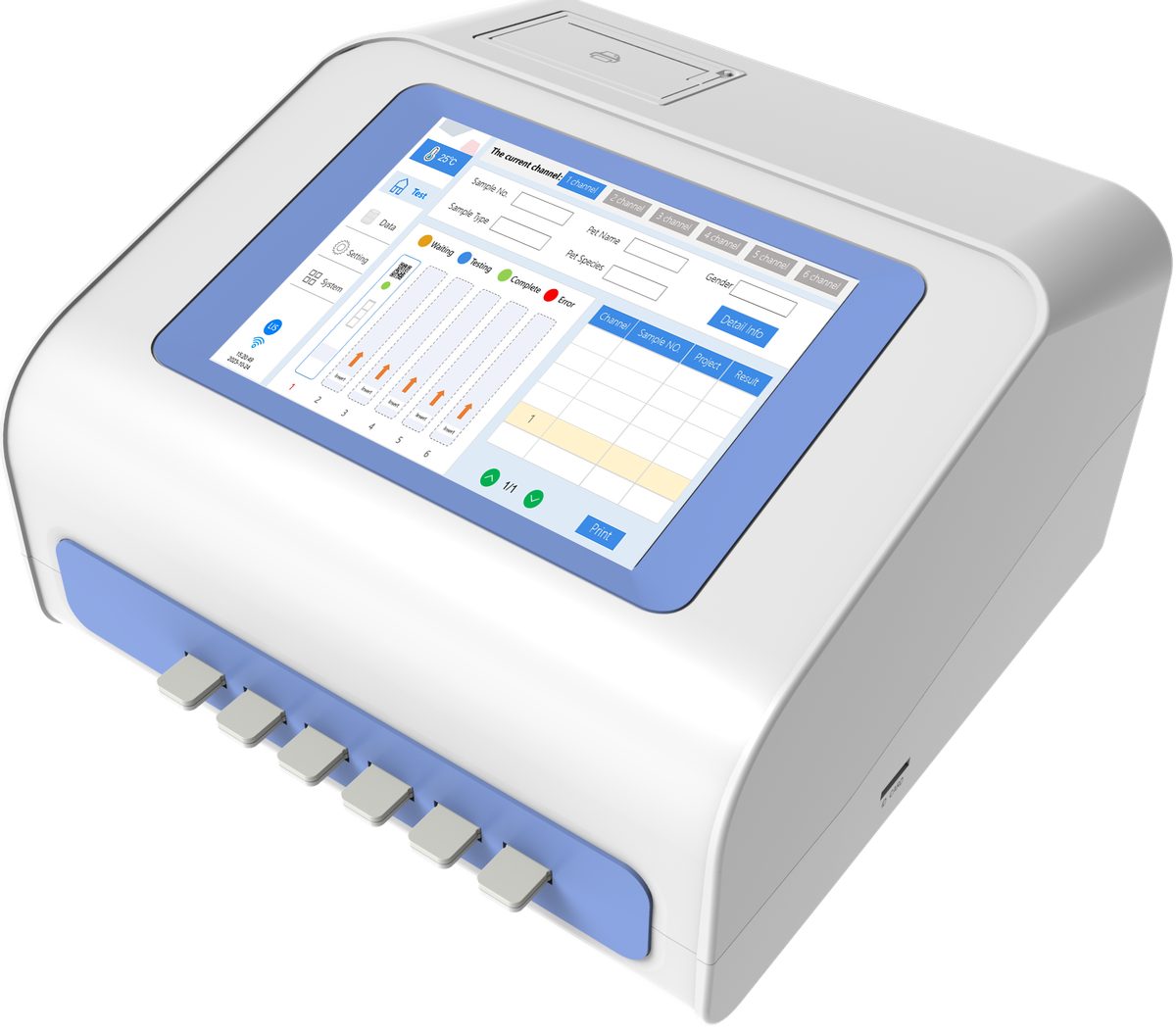
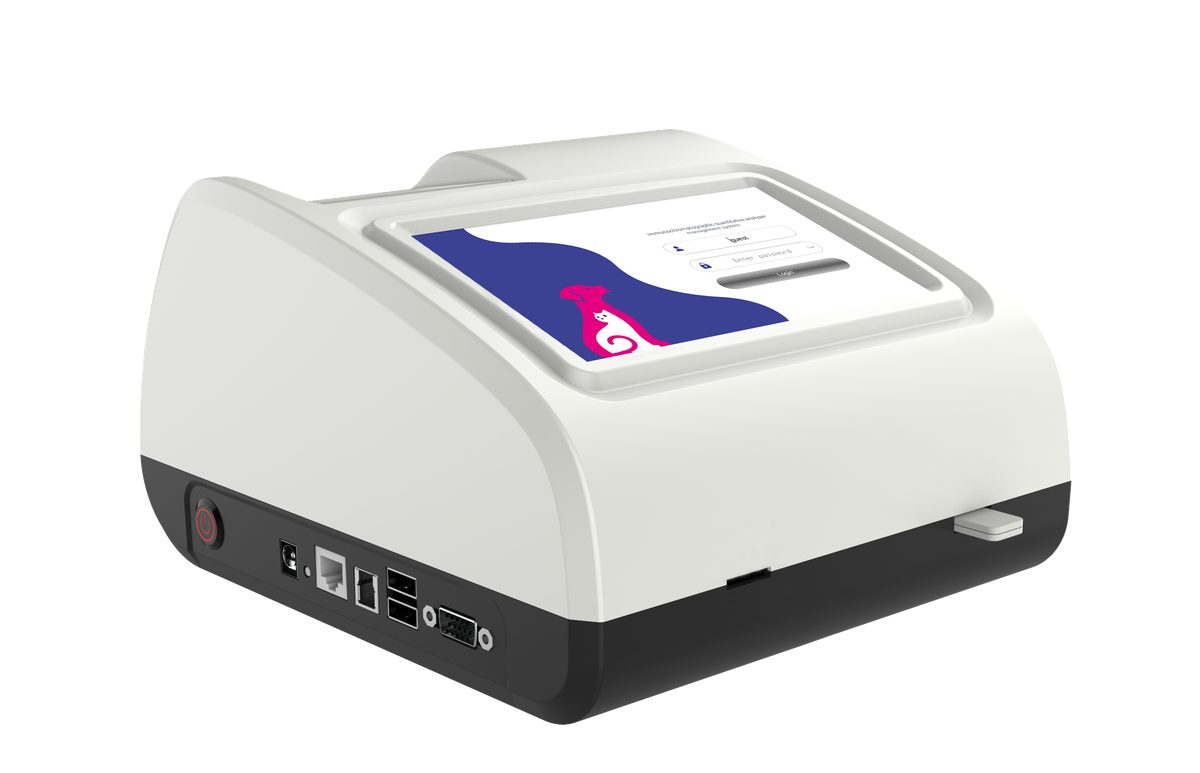
Both analyzers use Migibio's fluorescence immunochromatography (FICT) platform and share the same core performance — pg/ml-level sensitivity and CV% under 10% precision — with the full range of canine and feline reagent panels, so the decision comes down to workflow volume and footprint:
| Feature | FIA680 | FIA880 |
|---|---|---|
| Channels | Single-channel | Six independent channels |
| Result time | 3–11 minutes | 3–15 minutes |
| Throughput | Up to 200 tests/hour | Up to 300 tests/hour |
| Temperature control | — | Constant-temperature |
| Printer | Built-in thermal printer | Built-in thermal printer + A4 export |
| Best for | Mobile vets, small practices, on-site farm diagnostics | Reference labs, multi-clinician hospitals, high-volume networks |
For a detailed side-by-side walkthrough, see FIA680 vs FIA880: Which Analyzer Fits Your Practice. Both units include built-in thermal printing, multi-language interfaces (Chinese, English, Russian, Italian), and cloud standard-curve support via Wi-Fi.
What the analyzer actually measures
The analyzer reads the fluorescence signal from a completed test device. It is not a visual line reader and it does not infer a result from colour intensity alone: the instrument excites the fluorophores, converts the emitted signal through the stored standard curve and reports a concentration in the unit defined by the reagent IFU.
That distinction matters when comparing systems. A reader with a stable optical path, temperature control and a locked standard curve can support serial monitoring; a device that reports only positive or negative cannot show a trend. Ask for the assay menu, the sample types, the measuring range and the lot-to-lot precision data for the tests you intend to run.
What to confirm in a demo
- Assay menu: the canine and feline tests you actually use, not only the flagship menu.
- Workflow: sample preparation, device loading, result time and what happens when a test is interrupted.
- Data: how results are stored, exported and connected to the cloud standard curve.
- Training: who trains the operators, and what documentation remains after the demo.
- Service: response route, spare parts and software update process, in writing.
The right analyzer is the one that fits the clinic's daily queue and the tests it can support, not simply the one with the highest headline throughput.
Before you order
Confirm the assay menu against your case mix, not against a brochure count. Ask for the sample types, the reporting units and the current IFU for the tests you will run most often. A demonstration should include a sample run, a result export and a review of the QC routine, not only a product tour.
Ask for the service and training route in writing: who installs the analyzer, who trains the operators, how software and standard curves are updated, and what happens when a result is disputed. Those answers belong in the quotation, not in a follow-up call after delivery.